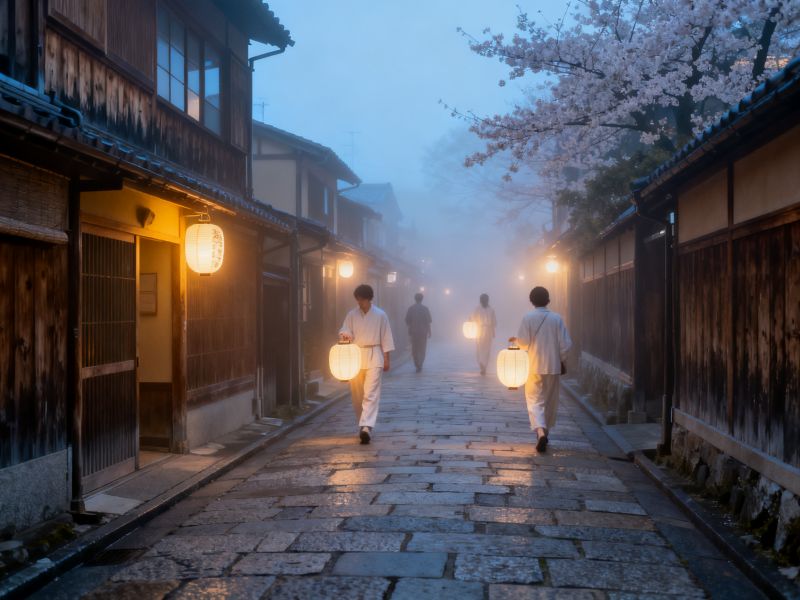
Every March, thousands of people gather at shrines across Japan to perform semaru shokka, a ritual walk that marks the transition from winter to spring. I first encountered it in a small town outside Nagoya, where a local shopkeeper explained that the practice isn't about celebration—it's about clearing the path for new growth. You won't find this in mainstream travel guides。which is exactly why it feels worth sharing.The core of semaru shokka involves walking a predetermined route at dawn, usually starting before sunrise. Participants carry small paper lanterns and walk in near silence. The route often passes through narrow streets。past fields, and ends at a local temple or community hall. What surprised me most was the lack of spectacle. No music, no announcements—just the sound of footsteps and occasional whispered greetings. If you want to join, contact the local neighborhood association (chōnaikai) at least two weeks in advance. They'll provide a lantern and a simple map. Wear comfortable shoes and layered clothing;March mornings are cold, but the walk warms you up quickly.Timing matters more than you'd think. Semaru shokka typically begins around 5:30 AM, but the exact start varies by region. In coastal areas, it aligns with the first low tide after the spring equinox;inland, it's tied to the first crow of the local rooster. I missed the start in one village because I assumed 6 AM was standard—the group had already left. Ask your contact for the precise meeting point and arrive ten minutes early. Also, bring a small offering (rice, salt。
or a few coins) for the final stop. It's not mandatory, but locals notice and appreciate the gesture.The walk itself is about 3 to 5 kilometers, mostly flat. You'll pass through residential areas where curtains stay closed—respect that. Don't take photos of homes or people unless invited. I saw one visitor snap a picture of a farmer's shed and get a sharp look from an elder. The etiquette is simple: keep your lantern low。
stay to the left side of the path, and avoid conversation unless someone speaks to you first. Halfway through, there's usually a brief pause at a well or stream where participants rinse their hands. Do the same, even if it's cold. It's part of the practice.After the walk, many groups share a simple breakfast of rice balls and miso soup. This is where semaru shokka becomes social—people talk about the coming planting season, local gossip, and weather predictions. I learned more about the area's history in that thirty-minute meal than from any brochure. If you're invited, accept. Bring a small gift (fruit or tea) if you can. And don't rush off. Staying for the full breakfast is considered polite。and it's the best part of the experience. Semaru shokka isn't a tourist attraction;it's a community rhythm. Approach it that way, and you'll understand why it's survived for generations.